
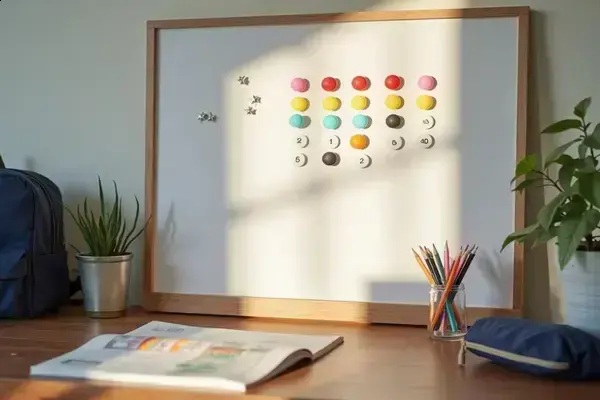
It’s 8 p.m., the toothbrush battle begins, and the sticker stash has vanished. Sound familiar? A simple fix — like a kids behavior chart printable free — can turn chaos into calm. Not magic, just structure kids can see and touch.
When there’s no plan, you end up repeating yourself, negotiating every step, and second-guessing rewards. That wears you down — time lost, patience thin, relationships tense. Kids get mixed signals, too, and the good habits you want never quite stick.
By the end, you’ll have APA-backed strategies for positive reinforcement, ready-to-print charts by age, and a clear exit plan. You’ll get a kids behavior chart printable free, plus the know-how to build intrinsic motivation so the chart fades out. Ready to make tonight smoother?
The Psychology Behind Behavior Charts: What Works, What Backfires, And Why
Why do stickers work one week and flop the next? The brain chases patterns and payoffs — and kids are no different. Consistent, visible rewards boost dopamine, which makes habits feel worth repeating.
Here’s the thing: behavior charts only work when they’re clear, immediate, and fair. Positive reinforcement (rewarding what you want) beats punishment almost every time. Add the Premack Principle — “first this, then that” — and you turn mundane tasks into tickets to preferred activities.
What Works — And What Backfires
| Technique | Why It Works | When It Backfires |
|---|---|---|
| Specific praise + small tokens | Links action to reward in seconds; builds clarity | Delayed delivery; vague goals like “be good” |
| Visual schedules + timers | Externalizes expectations; reduces arguing | Too many steps; no reset after transitions |
| Variable ratio rewards | Unpredictable payoffs keep behavior strong | Too soon or too random becomes confusing |
| Loss of points (punishment) | Short-term stopgap, sometimes | Shame, power struggles, avoidance |
| Too many target behaviors | — | Splits attention; nothing improves meaningfully |
💡 Pro Tip: According to the American Psychological Association and the National Association of School Psychologists, immediate, specific praise within 3–10 seconds accelerates skill learning more reliably than any consequence.
In practice: picture a 7-year-old who stalls at bedtime. You set a chart with two targets — brush teeth, lights out — and a visual timer. For each on-time step, they earn a star; five stars trade for reading with a flashlight. By night three, arguments drop because the path is visible and the payoff is simple.
- Dry-erase chart or magnetic board
- Tokens or stickers
- Small menu of rewards
- Visual timer
- Pick one to two measurable behaviors (e.g., “Brush teeth before 8:10 PM”).
- Define success criteria and how many tokens equal a reward.
- Deliver praise and token within 10 seconds — every time.
- Shift to a variable schedule after a stable week (e.g., 2–4 wins per token).
- Review nightly; tweak goals if frustration rises two days in a row.
If behavior challenges persist or involve safety, consult a pediatrician or a licensed behavior analyst.
And honestly? Most charts fail not from bad kids — but from fuzzy goals and late rewards. What actually works might surprise you…
APA-Backed Positive Reinforcement: Rewards, Praise, And Schedules That Stick
Which rewards actually stick — and how often should you give them? Here’s the thing: timing and clarity matter more than the size of the prize.
Positive reinforcement means you add something your child values right after the behavior you want. Use labeled praise (“You started homework at 4:00 — that’s responsible”) plus a small token. Delivered within 10 seconds, it builds a tight brain link between action and outcome, as highlighted by the American Psychological Association.
The truth is: kids don’t need big prizes. They need predictable wins, a simple reward menu, and an exchange rate that feels fair. Keep it light, quick, and specific — or motivation fades.
💡 Pro Tip: The PBIS framework from the U.S. Department of Education recommends a 4:1 positive-to-correction ratio. Aim for four moments of genuine, specific praise for every one redirect.
Reinforcement Schedules That Stick
| Schedule | Best Use | Risk If Misused |
|---|---|---|
| Fixed Ratio (FR) | Every X behaviors earns 1 token; great for early learning | Satiation if tokens come too fast; kids stop caring |
| Variable Ratio (VR) | Unpredictable wins after several successes; strongest long-term | Too random feels unfair; track a 2–4 range |
| Fixed Interval (FI) | Reward after a set time on-task; solid for study blocks | “Surfing” — effort only near the payout window |
In practice: picture this scenario — your 9-year-old resists starting homework. You praise the first sit-down within the first 10 seconds, hand a token, and set an FR-2 rule (two starts = 1 extra Minecraft minute). After one stable week, you shift to VR-2–4. Starts rise from 3/5 days to 5/5 — with fewer prompts.
- Define one measurable behavior (“Begin homework by 4:00 PM”).
- Create a 5–7 item reward menu (screen time, bike ride, stickers, choose dinner).
- Set an exchange rate (5 tokens = 10 screen minutes); keep earnings under 20 minutes daily.
- Deliver labeled praise + token within 10 seconds — every time.
- After 5–7 days of success, thin to a VR-2–4 schedule to prevent dependence.
- Review weekly; if frustration spikes two days straight, lower the bar and rebuild wins.
Worth noting: the CDC emphasizes predictable routines and clear expectations — your schedule is the backbone that makes rewards work.
But there’s one detail most parents overlook until it’s too late — the exchange rate that silently tanks motivation if it’s even a little off…
Step-By-Step: Set Up A Behavior Chart That Actually Works At Home
Ever tried a chart, only to watch it gather dust? Here’s the thing: success isn’t about cuteness — it’s about clarity, speed, and follow-through.
First, gather what you need. Setup takes 20 minutes, maintenance under 2 minutes a day.
- Dry-erase or magnetic board
- Colored magnets or stickers
- Visual timer (analog helps)
- Small token jar
- Reward menu card
- Fine-tip dry-erase markers
⚠️ Important Warning: Moving the goalposts (changing rules midweek) breaks trust fast. The American Academy of Pediatrics emphasizes stable routines — keep targets and rewards steady for at least 5–7 days.
Your 8-Step Home Setup
- Set a single objective. Choose 1–2 measurable behaviors (e.g., “Shoes on by 7:35 AM”). More than two dilutes focus.
- Define success in plain words. Write the exact look-for: time, place, and how you’ll know it’s done.
- Build the visual. Make a simple row per behavior and boxes for days. Use one color per behavior to reduce confusion.
- Create a reward menu. List 5–7 small privileges your child actually wants (bike ride, story pick, screen minutes, choose dessert).
- Set the exchange rate. Example: 1 token per success; 5 tokens = 10 screen minutes. Cap daily bonuses at 20–30 minutes.
- Nail the timing. Deliver labeled praise and token within 10 seconds of the behavior. Add the Premack cue: “First teeth, then flashlight reading.”
- Pick a schedule. Start with Fixed Ratio (every success earns a token). After a stable week, shift to Variable Ratio 2–4 to build staying power.
- Review and adjust weekly. If frustration shows two days in a row, lower the bar slightly, rebuild wins, then thin again.
In practice: picture this scenario — your 6-year-old dawdles every morning. You set two targets (dress by 7:25, shoes by 7:35), a timer, and a 5-tokens-for-park-time deal. By Thursday, departures move from “late 3/5 days” to “on time 5/5,” with less nagging.
What actually works might surprise you — especially when you tailor printable charts by age and stage…
Printable Behavior Charts By Age: Toddler, Preschool, School-Age, And Tweens
Which printable fits your child right now — toddler or tween? One-size-fits-all charts flop fast. You’ll get traction when the layout matches attention span and motivation.
Here’s the thing: the fewer targets and the faster the feedback, the better the behavior change, especially for younger kids. As executive function grows, the chart can shift from stickers to points, then to weekly privileges.
Age-Right Printable Anatomy
| Age Group | Focus Behaviors (2–3 max) | Chart Style & Rewards |
|---|---|---|
| Toddler (2–3) | Follow simple cue; tidy toys | Picture icons, big boxes; instant stickers; 1–2 wins = high-five + song |
| Preschool (3–5) | Morning steps; gentle sharing | Smiley faces; clear columns AM/PM; FR-1 tokens; 5 tokens = story pick |
| School-Age (6–9) | Homework start; pack backpack | Points grid; FR-1 then VR-2–4; menu: screen minutes, bike ride |
| Tweens (10–12) | Chores; device hygiene | Weekly ledger; daily caps; Friday privilege once points threshold met |
💡 Pro Tip: Zero to Three and the American Academy of Pediatrics note that young children learn fastest with immediate, concrete praise. Keep goals small, visuals bold, and rewards near-instant for under 6.
In practice: picture this scenario — your preschooler needs a calmer bedtime while your 11-year-old forgets chores. You print a two-column chart with moon icons for the little one (pajamas, teeth), FR-1 stickers, and a 5-sticker bedtime song. For your tween, you use a weekly points ledger (dish duty, laundry), a daily cap on screen minutes, and a Friday choice privilege once 40 points land.
- Update cadence: toddlers/preschoolers daily; school-age/tweens weekly review.
- Placement: eye level on the fridge or bedroom door; keep markers and tokens within reach.
- Design tips: color-code by child; split morning/evening; add a tiny “notes” square for quick wins.
- Motivation hygiene: right-size exchange rates; keep screen-time rewards under 20–30 minutes on weekdays.
- On-the-go: print a half-size travel card; transfer tokens when you’re back home.
And honestly? Age-fit printables turn “reminders” into visible routines — and cut the nagging in half. But there’s one detail most families overlook until it’s too late: how to fade the chart so motivation sticks without it…
Transition Off Charts: Build Intrinsic Motivation, Self-Regulation, And Consistency
What happens after the stickers work — do you keep using them forever? You don’t have to. The goal is to remove the training wheels without losing momentum.
Here’s the thing: intrinsic motivation grows when kids feel autonomy (I have a say), competence (I can do it), and relatedness (I matter here). Self-Determination Theory (Deci & Ryan, University of Rochester) shows these three pillars are what sustain habits once the rewards fade.
Stabilize first. Hold the chart steady until your child hits about 80% success for 5–7 days. Why? The brain needs a clear pattern before it can run on lighter reinforcement — otherwise the routine crumbles.
Then thin. Shift from every-win tokens to occasional, unpredictable praise. Keep acknowledgement specific (“You started on time — that’s follow-through”), but deliver fewer tokens and more natural outcomes (extra story because we finished early).
Transfer ownership. Add one minute of self-monitoring: a quick checkmark and a 10-second reflection — “What helped? What’s tomorrow’s plan?” According to CASEL, micro-reflection builds self-regulation and executive function more reliably than external rewards alone.
In practice: your 8-year-old now brushes and lights out on cue. Week one, you move from a token every success to every second or third success; bedtime still lands on time. Week two, you drop tokens entirely, keep labeled praise, and let the natural reinforcer do the work — more cuddle minutes because everything ran smoothly. By week three, your child marks the box themselves and says what made it easier.
Anchor values. Tie behavior to identity: “We’re a family that finishes what we start.” Connect to real-life payoffs — calm mornings, more play, trust with devices. The American Academy of Pediatrics underscores predictable routines and warm, specific feedback as core to lasting behavior change.
💡 Pro Tip: The National Association of School Psychologists recommends fading supports only after consistent success. Drop external rewards by 25–50% weekly, while increasing self-monitoring and choice.
Worth noting: you can always reintroduce a short booster chart during transitions (new school year, holiday jet lag) — then fade again once stability returns. Small steps, repeated consistently, make the biggest difference over time.
Better Habits, Calmer Days Ahead
Three things matter most: science-backed reinforcement, a simple setup with fair exchange rates, and age-fit printables you’ll fade as skills grow. If you take just one thing from this guide, let it be: clear, immediate praise plus small rewards beats bigger, slower prizes. Use a kids behavior chart printable free to make expectations visible and wins fast.
Before, mornings dragged, bedtime slid late, and every request sparked a debate. Now you’ve got a plan — measurable targets, a timer, and tokens that actually motivate. You’ll see fewer reminders. Faster starts. Calmer transitions. Your child feels capable, and you feel in control without power struggles.
Which age-fit chart will you try first — toddler icons, school-age points, or a tween weekly ledger? Tell us in the comments; I’m curious what routine you’ll tackle today.

About the Author: Stephanie Lynn Barrett is a homeschooling mom, educational writer, and the founder of this blog — built for parents who want to give their children the best possible learning experience at home without burning out in the process.
After years of homeschooling her own children, testing every curriculum approach, building and rebuilding daily schedules, and creating hundreds of hands-on activities from scratch, Stephanie realized that most of the resources available online were either too complicated, too expensive, or too generic to be genuinely useful for real families with real kids.
So she started creating her own — practical lesson plan templates, age-appropriate activity ideas, printable routine charts, and honest curriculum guides designed for parents who are figuring it out as they go.
Stephanie is not a certified teacher or child psychologist — just a dedicated homeschooling parent who has spent years in the trenches, learning what works and what doesn’t, and turning every hard-won lesson into content that saves other parents time, stress and second-guessing.
Every article on this site is researched using trusted educational sources including the American Academy of Pediatrics, the American Library Association, the Home School Legal Defense Association, and the American Psychological Association — so you always get guidance that is practical, age-appropriate and grounded in real child development research.
When she’s not writing or planning next week’s lessons, Stephanie is testing new sensory play ideas with her youngest, hunting for the perfect read-aloud for her oldest, and convincing her family that yes, math can actually be fun.