Ever hit day three of summer break and the “I’m bored” chorus starts before breakfast? You look at the calendar — blank. The day stretches, and your patience already feels thin.
Here’s the thing: without a light plan, days drift into extra screen time, impulse spending, and the heat-induced squabbles no one asked for. You lose time hunting for ideas, you overpay for last-minute outings, and kids bounce between restlessness and sugar spikes. It’s exhausting — and it steals the fun.
By the end, you’ll have 50 kid-tested ideas organized by outdoor, indoor, creative, educational, and physical play, plus a free bucket list planner and a simple rhythm to balance structure with unstructured time. You’ll also get the exact printable you need — the summer activities for kids printable — with options for every budget from free to low-cost. Ready to make this the summer that actually works?
Outdoor Adventures Kids Love (Free To Low-Cost)
Want outdoor fun that doesn’t drain your wallet? Here’s the thing: kids don’t need theme-park budgets — they need mini-adventures with clear goals and a little structure. Start small, stay local, and watch energy turn into smiles.
Which options give the best play-to-effort ratio for busy weekdays?
| Activity | Typical Cost | Why Kids Love It |
|---|---|---|
| Park Scavenger Hunt | $0–$2 (small prize optional) | Turns a simple walk into a mission; color matching, sign spotting, and quick wins. |
| Creek Critter Count | $0 (water shoes optional) | STEM in the wild — observe insects, measure water speed, sketch finds. |
| Sunset Picnic & Storytime | $0–$5 (bring-from-home) | Golden-hour calm, snack ritual, and a cozy wind-down under changing sky. |
Worth noting: city parks are free, while some state sites charge a day-use fee ($5–$10). A yearly park pass can be cheaper if you’ll go often.
💡 Pro Tip: According to the American Academy of Pediatrics, aim for 60 minutes of active play daily; in heat, schedule mornings or evenings and offer water every 20 minutes (about 3–8 oz for school-age kids). Check the UV index (CDC guidance) and reapply SPF 30+ sunscreen.
If your child has asthma, a heart condition, or heat sensitivity, ask a pediatrician about activity limits during high temperatures.
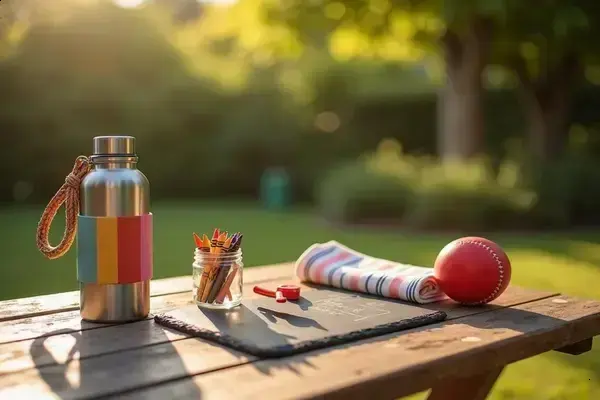
Quick Gear List Under $10
- Reusable water bottle with flip cap
- Travel-size SPF 30+ sunscreen stick
- Chalk for route arrows and finish lines
- Compact magnifying glass
- Whistle on a braided lanyard
- Lightweight microfiber towel
- Zip-top bags for leaf or rock finds
5-Step Micro-Hike Plan (30–45 Minutes)
- Pick a loop trail under one mile; note shade and bathrooms.
- Set a kid-friendly goal: “Find 5 textures” or “Spot 3 bird calls.”
- Create a simple start line with chalk; explain the route and signal.
- Walk-and-pause rhythm: 5 minutes exploring, 2 minutes water break.
- Finish with a “cool-down job” — stretch, snack, and one photo of the best find.
Picture this scenario: it’s 6:15 p.m., dinner’s in 40 minutes, and everyone’s restless. You grab the bottle, chalk, and whistle — twenty minutes later, the “I’m bored” chorus is gone.
But there’s one detail most parents overlook until it’s too late…
Indoor Rainy-Day Wins With A Free Bucket List Printable
Rain pounds the windows, the floor is a Lego minefield, and the “what now?” look is spreading. Here’s the thing: a free bucket list printable turns cabin fever into choices — fast.
What actually makes a printable work instead of becoming fridge clutter? Two levers: visible options and timed blocks. According to the National Association for the Education of Young Children, predictable routines paired with child choice boost focus and reduce power struggles.
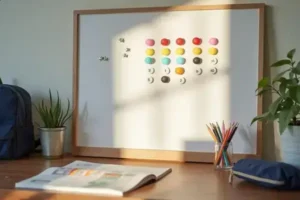
💡 Pro Tip: Use a dry-erase surface and color-code three buckets: Quick Wins (10 min), Create & Build (20 min), Move & Reset (5 min). Child Mind Institute notes visual schedules ease transitions — set a kitchen timer so kids see and hear the switch.
What The Bucket List Printable Includes
- Three columns with checkboxes: Quick Wins, Create & Build, Move & Reset.
- Notes row for materials (markers, tape, cardboard, puzzles).
- Star tally bar for completed blocks — trade 3 stars for a cozy perk.
- “Rainy Meter” — circle drizzle, rain, or storm to match indoor energy expectations.
- Dry-erase friendly layout sized for the fridge or a magnetic board.
How To Use It (30–60 Minutes)
- Post the printable at kid eye level; hand them the marker.
- Brainstorm 3–5 options per column together, then check the day’s picks.
- Set a 10-minute timer for a Quick Win (puzzle mini, card-sort, joke jar).
- Switch to 20 minutes Create & Build (fort, puppet sketch, marble run).
- Run a 5-minute Move & Reset (yoga cards, hallway bowling, balloon keep-up).
- Log a star, sip water, and repeat one more cycle if time allows.
In practice: your 7-year-old circles “rain” on the meter, checks “paper airplane test,” “sock-puppet show,” and “balloon rally.” You set the timer — tension drops, the room gets purposeful, and you get ten quiet minutes to breathe.
Keep it fresh by rotating in high-interest items (STEM mini-kits, logic puzzles) and noting low-mess choices for apartments. Worth noting: consistent time blocks build self-regulation — you’ll see smoother transitions by week two. And this is exactly where most people make the most common mistake…
Creative Projects That Spark Imagination (Minimal-Mess Options)
You want big imagination — without glitter explosions and paint puddles. Here’s the thing: minimal-mess creativity comes from smart materials, tight boundaries, and a two-minute reset plan. Kids feel free; you stay sane.
So what actually keeps projects tidy while still feeling open-ended? Three factors: containerized color (no spill), dry-transfer texture (peel, press, lift), and quick-dry mediums. The Harvard Center on the Developing Child notes that open-ended making builds executive function — planning, working memory, flexible thinking — when kids can start fast and finish clean.
💡 Pro Tip: Set a “no-spread zone” — a silicone craft mat, a damp microfiber cloth, and a tiny trash cup. Choose non-toxic supplies labeled ASTM D-4236, then run a 90-second cleanup timer. It feels like play, but it’s a system.
Minimal-Mess Materials: Quick Compare
| Material | Cleanup Time | Why It Works |
|---|---|---|
| Watercolor Brush Pens | 60–90 seconds | Water is in the pen — no cups, no drips; blends on contact, great for gradients and maps. |
| Tempera Paint Sticks | 45–60 seconds | Solid tempera glides like lipstick; bold color without wet paint, dries in under a minute. |
| Washi Tape Rolls | 30–45 seconds | Low-tack paper tape; layer, outline, and peel to “undo” lines — instant frames and patterns. |
In practice: you drop a silicone mat on the table and place three choices: brush pens, two paint sticks, and a bowl of washi tape. Your 8-year-old designs “mini movie posters” — tape borders, color blocks, quick peel for clean edges — and you’re done before dinner with zero sink time.
The truth is, constraints boost creativity. Set a 15-minute “make sprint,” offer a single theme (underwater alley, moon market, tiny zoo), and limit tools to two colors plus tape. That narrow lane forces problem-solving — kids iterate fast, you avoid supply sprawl, and costs stay budget-friendly under $10 per project.
Picture this scenario: Saturday morning, coffee in hand, you say, “Pick two tools and one theme.” They grab teal and gold, choose “desert robots,” and map shapes with tape first. Five minutes later, color fills the spaces like stained glass — clean lines, big impact, no panic cleanup. But what actually works when you need learning baked into the fun might surprise you…
Educational Quests That Feel Like Play (STEM, Nature, Culture)
You want learning that feels like a game — not homework in disguise. Here’s the thing: call it a quest, give a role, and add a clock. Curiosity does the rest.
What makes a “quest” work so well for STEM, nature, and culture? A clear mission and quick feedback. The Smithsonian Science Education Center highlights inquiry-first tasks — kids ask, test, and show evidence — as a proven way to boost real understanding without long lectures.
💡 Pro Tip: Make a one-sentence mission card: Role (Explorer), Rule of Three (find 3 examples), and Proof (photo, sketch, or demo). That tiny structure reduces cognitive load and keeps the fun front and center.
Quest Ideas, Sorted By Theme
- STEM — Bridge Budget Test: Build a 6-inch span with craft sticks and tape; load-test with pennies. Cost: $2–$5. Skills: estimation, iteration, force.
- Nature — Pollinator Safari: Tally bees, butterflies, and blooms in 10 minutes; sketch one close-up. Free. Skills: observation, classification.
- Culture — Mini-Museum Curation: Pick three objects from home, arrange a “display,” and write one label each. Free. Skills: storytelling, theme-making.
- STEM — Shadow Mapping: Trace an object’s shadow at noon and again at 3 p.m.; compare angles. Free. Skills: measurement, earth-sun model.
- Nature — Micro-Habitat Hunt: Identify “cool,” “dry,” and “shady” spots; list two creatures each might help. Free. Skills: systems thinking.
- Culture — Rhythm Passport: Clap and tap to three beats from different regions (use household items as instruments). Free. Skills: patterning, listening.
Set Up A 20-Minute Micro-Quest
- Pick a theme and write one mission sentence with a success check (photo, count, or sketch).
- Gather light tools: small magnifier, aluminum flashlight, clipboard substitute (smooth tray), and a timer.
- Assign roles: Explorer (decides path), Recorder (tracks evidence), Presenter (shares the win).
- Run 12 minutes to explore; pause once for a 30-second “what changed?” check-in.
- Take 5 minutes to build the proof (mini demo, labeled sketch, or before/after photo).
- Use the final minute to name one pattern and one next question.
In practice: your 9-year-old draws “Map three micro-habitats” on a card, grabs the magnifier, and leads the team to the shady side of the yard. They spot pill bugs under a stone — quick sketch, one photo, big grins.
And this is exactly where most people make the most common mistake — they skip the movement reset that locks learning in…
Active Play And Sports To Burn Energy Safely
You want kids to burn energy — and come back smiling, not scraped up. Here’s the thing: speed plus structure equals safe fun. Short bursts, clear lanes, and simple gear keep everyone moving without chaos.
Wondering how much is enough without overdoing it? The U.S. Department of Health and Human Services recommends 60 minutes of moderate-to-vigorous activity daily for ages 6–17. Use intervals — 2–3 minute sprints and games with 1-minute rests — and add a 3-minute dynamic warm-up (arm circles, high knees) to reduce injury risk, as noted by the American College of Sports Medicine.
| Activity | Gear Cost | Safety Focus |
|---|---|---|
| Relay Cones + Sprints | $6–$12 | Clear lanes; watch for wet grass and holes. |
| Jump Rope Rounds | $5–$10 | Non-slip sneakers; start with slow timing. |
| Soccer Dribble Zigzag | $8–$20 | Shin guards if scrimmaging; space out cones. |
| Balance Beam (chalk line) | $0 | Flat surface; hands free, eyes forward. |
| Scooter Time Trial | $20–$40 | Helmet, closed-toe shoes; smooth pavement only. |
| Water Balloon Toss | $2–$4 | No running on slick areas; clear broken pieces. |
⚠️ Important Warning: On high heat days, schedule mornings or evenings, shade breaks every 10 minutes, and water every 15–20 minutes. Check the UV index and use SPF 30+ on exposed skin; helmets are non-negotiable for wheels per Safe Kids Worldwide guidance.
15-Min Backyard Circuit (Ages 6+)
Time: 15 minutes total; Prereq: safe space cleared of obstacles.
- 2–4 plastic cones
- Jump rope
- Soccer ball
- Stopwatch or phone timer
- Water bottle
- Warm up for 3 minutes — arm swings, toe touches, light jog.
- Do 2 minutes of cone relays: sprint down, backpedal back.
- Hit 1 minute of jump rope; focus on soft, quiet landings.
- Run 2 minutes of soccer dribble zigzags; switch feet each cone.
- Walk 1 minute to reset; sip water and check breathing.
- Repeat steps 2–5 once; finish with 30 seconds of deep belly breaths.
In practice: your 10-year-old sets the timer and calls, “Relays first!” You mark lanes with cones, start the beeps, and by minute 12 they’re flushed, proud, and settling into that happy-tired state that makes dinner calm again.
Once this rhythm is set, the rest of your summer routine falls into place naturally.
Your Summer Plan, Simplified
You’ve got a simple play framework, budget-friendly ideas for every mood, and safety cues that make movement smooth. Outdoors, indoors, creative, and quest-based play all fit into short, repeatable blocks. The bucket list keeps kids choosing, the micro-steps keep you calm, and timers keep transitions kind. If you take just one thing from this guide, let it be: clear structure plus choice beats boredom every time — and the summer activities for kids printable makes it effortless.
Before: long days, stalled plans, too much screen time. After: micro-hikes at dusk, rainy-day cycles, low-mess art sprints, quick STEM quests, and a safe backyard circuit. Short plans. Fast setup. Predictable rhythms that save money and sanity. You’re not chasing fun anymore — you’re guiding it.
Which idea are you trying first — the scavenger hunt, the bucket list cycle, or the 15‑minute circuit? Tell us in the comments!

About the Author: Stephanie Lynn Barrett is a homeschooling mom, educational writer, and the founder of this blog — built for parents who want to give their children the best possible learning experience at home without burning out in the process.
After years of homeschooling her own children, testing every curriculum approach, building and rebuilding daily schedules, and creating hundreds of hands-on activities from scratch, Stephanie realized that most of the resources available online were either too complicated, too expensive, or too generic to be genuinely useful for real families with real kids.
So she started creating her own — practical lesson plan templates, age-appropriate activity ideas, printable routine charts, and honest curriculum guides designed for parents who are figuring it out as they go.
Stephanie is not a certified teacher or child psychologist — just a dedicated homeschooling parent who has spent years in the trenches, learning what works and what doesn’t, and turning every hard-won lesson into content that saves other parents time, stress and second-guessing.
Every article on this site is researched using trusted educational sources including the American Academy of Pediatrics, the American Library Association, the Home School Legal Defense Association, and the American Psychological Association — so you always get guidance that is practical, age-appropriate and grounded in real child development research.
When she’s not writing or planning next week’s lessons, Stephanie is testing new sensory play ideas with her youngest, hunting for the perfect read-aloud for her oldest, and convincing her family that yes, math can actually be fun.